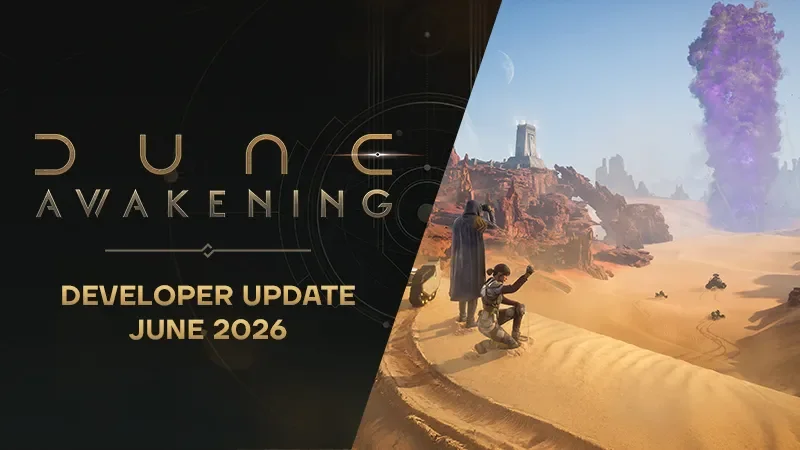
Since launching last year in June, Dune: Awakening has seen single-player as its most requested feature. On June 24, 2026, Funcom shared a deep dive into the technical work required to transform their persistent open-world survival game into a local experience.
Databases and Authority
The original multiplayer setup relied on PostgreSQL, a server-grade database for handling massive data transfer rates. For single-player, they switched to SQLite — a lighter, serverless option. This trade-off trades scalability for better performance on a local machine.
“Transferring the complex persistence and validation logic so that it behaves the same way when the client acts as its own authority was quite a lengthy process!”
Expanding to consoles also meant tighter memory constraints. The team had to shift the game from server-governed to client-governed, revisiting every system while keeping the multiplayer mode intact.
Redistributing the Heavy Lifting
Multiplayer infrastructure tracks thousands of interactions across multiple servers. For single-player, they stripped away that overhead and focused on seamless map-to-map loading. But now your machine handles everything — combat logic, vehicle simulation, and rendering all at once.
The Deep Desert region is the largest map. A dedicated server keeps it fully loaded, but a local machine can’t. So they rewrote the physics scene to stop loading all content simultaneously, ensuring the game still works properly.
Translating Multiplayer Features
Funcom didn’t detail every converted feature in this post, but they confirmed the process of adapting multiplayer systems for solo play is ongoing. The team is working through each gameplay element to make sure it functions without a server backing it up.
This is a fundamental re-architecture of the game, not just a toggle. The single-player mode requires the client to act as its own authority for everything from item persistence to vehicle physics.